Honor Play Review and Specs

Huawei recently became the second largest smartphone manufacturer in the world.  On top of that, it just made it into the top five smartphone manufacturers in India, carried by the success of its phones and that of its sub-brand, Honor.

Honor’s new phone, the Honor Play, is aimed at power users and gamers on a mid-range budget, packing in top-of-the-line specifications. It doesn’t have the high-refresh rate display or fancy liquid cooling system of other gaming phones, but it’s got the company’s new GPU Turbo technology, which promises an enhanced visual experience while gaming. You can buy it here in the Philippines through Lazada via Cash On Delivery.

Design and Display

Honor Play comes with a 6.3-inch screen Full HD+ display, 2340 x 1080 resolution, and a pixel density of 409ppi. Users have the option to manually lower it to HD+ (1560 x 720) or enable Smart resolution to let the device automatically lower the screen resolution to help save power. Other screen features include the ability to hide the notch and adjust color modes and temperature. 

Display quality is okay as it is sharp with accurate colors. Viewing angles are decent but tend to look dimmer when viewed from the top. It’s not a serious issue though as we never encountered any problems when operating the phone normally, watching videos, or playing games.

Honor Play has a full-metal unibody, and a look that’s heavily influenced by the design language of the Honor 10. This phone feels even easier to hold in your hand though, as unlike the 10 it doesn’t have a glass back, although it is a touch heavier than the Honor 10 at 176g.

Software

The Honor Play runs on EMUI 8.2 based on Android 8.1 Oreo. If you have handled the Honor 10 or Huawei Nova 3i, the experience is very similar. It uses multiple home screens to house the apps and uses the leftmost home screen for Smart Care which is like a hub for relevant information as well as shortcuts.

Google’s own apps are present as well as a few from Honor like the AppGallery which is like Huawei’s own app store, the Honor app, HiCare, and Party Mode which was mentioned earlier. What we don’t like though is the number of pre-installed apps. There’s 13 in total, 7 of them are games. These can be uninstalled though if you’re not going to use them.

Performance

Inside the Honor Play is a HiSilicon Kirin 970 chipset – Kirin chips are made by Huawei, and power both its and sister brand Honor’s phones, and that’s the same chipset that powers the Huawei Mate 10 series and the excellent Huawei P20 Pro.

It’s a powerful chipset that almost rivals Qualcomm’s Snapdragon 845, which is running in a selection of top-end phones, and it ensures a smooth experience when opening up multiple apps on the phone and speedily completing tasks.

The Honor Play is available with either 4GB or 6GB of RAM, although some markets are only getting one variant – in the UK you can only buy the 4GB of RAM version with 64GB of storage on board.

Our benchmarking tests saw the Honor Play achieving similar scores to both the Honor 10 and Huawei P20 Pro. In fact, the phone’s score of 6,602 beat the Honor 10’s 6,570 and was just a little behind the P20 Pro’s score of 6,775.

That makes the Honor Play a top-end phone for performance in terms of benchmarking, and it justifies the phone being aimed at those who want to play Fortnite, PUBG and other intensive gaming titles.

Camera

Honor Play is equipped with 16MP + 2MP rear cameras, and a 16MP front camera. It’s loaded with features like Night mode, HDR, 3D Panorama, 3D Creator, Slow-mo, Light painting, Pro mode, Panorama, and Time-Lapse, to name a few.

Like with other Honor devices, it has an AI mode which improves the quality of the photo, Portrait mode with Beauty effects, and AR Lens for fun stickers and backgrounds. So far, quality is good, especially in bright light. It can handle dim conditions but expect to see some noise and lack of details. Check out the samples below. For video recording, it can shoot at a maximum of 4K resolution at 30 fps in MP4 format.


Battery

Honor Play packs a 3,750mAh cell, which considering it’s powering a Full HD screen should be enough to get you through the whole day; we generally found the Honor Play would last a whole day from one charge with middling to intensive usage, and on only one day of our full week of testing did the Honor Play struggle to make it to 10PM.

That’s likely as we were doing lots of gaming and watching lots of video with the screen at full brightness – we found that taking the screen down to below full brightness would save a worthwhile amount of juice.

Full Specifications:

  • Android 8.1 Oreo, EMUI 8.2
  • Dual SIM, Dual Standby (Hybrid)
  • 6.3-inch Full HD+ 19.5:9 aspect ratio Display, 2340 × 1080 pixel resolution, ~409ppi
  • 2.4GHz HiSilicon Kirin 970 octa-core processor
  • 4GB RAM
  • 64GB internal storage, expandable via microSD up to 256GB
  • 16-megapixel (f/2.2) + 2-megapixel (f/2.4) rear cameras with PDAF, Dual tone LED flash
  • 16-megapixel (f/2.0, 2.0µm) front camera, 3D Portrait Lighting
  • HSPA+, 4G, LTE, VoLTE
  • Wi-Fi 802.11 a/b/g/n/ac, Wi-Fi hotspot, Dual-band
  • Bluetooth, NFC
  • GPS, A-GPS, GLONASS
  • USB Type-C
  • Fingerprint sensor
  • Histen audio
  • Dimensions: 157.9 x 74.3 x 7.5 mm
  • Weight: 176 g
  • 3,750mAh non-removable battery with fast charging


Xiaomi Mi Max 3 Review and Specs

Xiaomi has upgraded the biggest smartphone in its line-up, with the Mi Max 3 boasting a larger than ever 6.9inch screen. Even if you’re not a lover of big-screen phones, it’s difficult not to see the appeal of the Mi Max 3, which is best-described as a super-sized version of the insanely popular Redmi Note 5. It’s an affordable smartphone with a great screen on which to play games, watch movies and get stuff done, and it has capable performance for daily use. Here in the Philippines you can buy it through Lazada via Cash On Delivery.

Display and Design

Xiaomi Mi Max 3 offers 6.9-inch IPS LCD running a 2,160 x 1,080-pixel resolution in an 18:9 resolution. That gives it a pixels-per-inch measurement of 350, making it far from one of the sharpest phones we’ve ever seen, but it should be clear enough for most. Slim bezels run up the sides of the phone, leading into a fairly slim forehead and chin. Not the slimmest we’ve seen, but not terrible for a midrange phone.

The case of the Xiaomi Mi Max 3 is made of metal and offers a good grip due to its very rounded edges. Since the display sticks out above the body by about 1 mm (~0.04 in), it looks as if it was placed on top of the base, but it still fits well into the overall appearance. The transitions between the materials fit tightly and show very good workmanship.

Software

Mi Max 3 runs on Android 8.1 Oreo, but it will be hidden under MIUI 9.5, the latest version of Xiaomi’s Android skin. MIUI isn’t a terrible re-skin of Android, but it’s certainly different, so it’s fair to expect some different-looking menus and settings on the Mi Max 3. However, Xiaomi’s update game is good, and you can probably expect the Mi Max 3 to receive the MIUI updates for Android P and Android Q.

Performance

The Mi Max 3 swaps the Snapdragon 625 for the 636, here clocked at 1.8GHz and now with integrated Adreno 509 graphics. As such performance gets a boost from the new 14nm octa-core chip – and perhaps we would have seen even better results had we tested the 6GB RAM model.

In Geekbench 4, for example, the multi-core score shot up from 4300 points to 4716. It’s not going to make a huge difference to everyday use, but it is at least going in the right direction (which couldn’t be said for the Mi Max 2 in comparison to the original). 

Graphics performance has also improved, but this is still no powerhouse in this regard. Previously able to achieve 22fps in GFXBench T-Rex, the new-generation Mi Max can handle 34fps. This is a playable framerate, but you won’t want to tax it with anything too intensive.

In real-world usage the Mi Max 3 feels fluid, with apps – even the camera – launching quickly, and the phone rarely pausing to breathe. The fingerprint sensor, found at the rear of the device, also works well.

Camera

The Mi Max 3 offers a 12+5 MP dual camera system with an f/1.9 aperture on the back and an 8 MP front camera with an f/2.0 aperture. With the latter, you can take portrait pictures of mediocre quality. While the details are reproduced well in the foreground and background, there is some very coarse graininess even without the zoom. This prevents color transitions from appearing cleanly and blends light and dark areas together, instead of them remaining separated. In Portrait mode, you can influence the image by adjusting the skin tone, eye size, or width of the chin, for example.

The main camera of the Mi Max 3 is well-suited for the occasional panorama picture. Large brightness differences only cause limited problems for the Xiaomi phablet. In dark image areas, details remain recognizable and can be distinguished from other objects. The whole image offers many details, although they become slightly blurry when zooming in. In close-ups, this blurriness even occurs with objects that remain outside the focal range. Even though this effect is only slight, it is still noticeable.

Colors appear saturated, and light and dark areas are well delineated in the image here as well. Details also remain recognizable. However, at the edges of the images there is some slight graininess that can only be seen when zooming in. Under bad light conditions, objects in the image barely remain recognizable, with large areas of the image becoming black. You can adjust the values for white balance, ISO, shutter speed, and focus via a manual photo mode to influence the image quality.

Video-recordings with the Xiaomi smartphone produce a similar result as our example pictures. An image stabilizer compensates for smaller movements. While the camera app of the Mi Max 3 does not offer a professional mode for videos or something similar, there is a Time Shift and a Time Lapse mode.

Battery

Battery life is very good from the 5,500mAh cell – double the capacity of that found in some Android phones. Obviously how long it will last depends on how you use the Mi Max, but we can see two days being easily obtainable here. Xiaomi says it is good for 17 hours of video playback.

There is no wireless charging, but the Mi Max 3 does support Quick Charge 3.0. Despite having such a huge battery to refill you can obtain as much as 71% charge in just one hour.

Full Specifications:

  • Android 8.1 Oreo, MIUI 9
  • Dual SIM, Dual Standby (Hyrbrid)
  • 6.9-inc Full HD+ 18:9 IPS 2.5D Curved Glass Display, 2160 x 1080 pixel resolution, 84% NTSC color gamut
  • 1.8GHz octa-core Snapdragon 636 14nm processor
  • Adreno 509 GPU
  • 4GB /6GB LPDDR4x  RAM
  • 64GB / 128GB (eMMC 5.1) storage
  • 12-megapixel Sony IMX363 rear camera, f/1.9 aperture, 1.4µm pixel size, Dual PD focus, LED flash
  • 5-megapixel secondary rear camera
  • 8-megapixel front camera, f/2.0 aperture, 1.12μm pixel size, soft LED flash
  • HSPA+, Dual 4G VoLTE
  • Wi-Fi 802.11ac (2.4GHz / 5GHz), Wi-Fi hotspot
  • Infrared sensor
  • Bluetooth v5.0
  • Fingerprint sensor
  • GPS, A-GPS, GLONASS
  • 3.5mm audio jack
  • USB Type-C
  • Dimensions: 176.15×87.4×7.99mm
  • Weight: 221g
  • 5,500mAh non-removable battery

Lenovo Z5 Review and Specs

Lenovo created quite a hype when they teased the renders of their upcoming Z5 smartphone. The device caught the eye of the public because its renders showed an all-screen setup. Sadly, that was false hope as the phone was revealed to have a notch. The Lenovo Z5 is still not a shabby looking device. It has an almost bezel-less display and a colorful yet very shiny back panel at an affordable price. You can but it here in the Philippines through Lazada via Cash On Delivery.

Display and Design

Lenovo Z5 uses a 6.2 inch Full HD Plus LCD Display with the notch. It comes with a DCI-P3 wide color gamut and is known as the ‘Full-Color Screen. The somewhat unfamiliar resolution of 1080 x 2246 comes about through 18:7:9 aspect ratio. The display is a bit wider or longer than a normal 16:9 Full HD Display. The display is bright, with a good contrast and a very strong black point for a smartphone of this class. Lenovo uses rather softer colors and seems to have adopted the display for that. Photos and pictures are pleasantly strong.

The front and back panels of the Lenovo Z5 adopt the Corning Gorilla Glass material. It is smooth and bright, reflecting the shadow of buildings and flowers. The middle metal frame comes with a curved transition. Actually, the phone comes with a small body, which is easy to hold in hands.

Performance

The Lenovo Z5 is equipped with a Snapdragon 636 chip, which has appeared on various models such as the Meizu E3 and Xiaomi Redmi Note 5. This SoC is known as the youth version of the much-popular Snapdragon 660. The only difference is the clock speed. The SND660’s highest frequency is 2.2GHz, while this parameter for the SND636 is 1.8GHz. The other parameters of these two chips are roughly the same.

The Snapdragon 636 chip uses a 14nm process node, a Kryo 260 CPU, and an Adreno 509 GPU. In addition, there are 14 digital components such as Qualcomm Spectra 160 ISP, Hexagon 680 DSP, and X12 LTE baseband.

What’s more important, the Snapdragon 636 comes with the same Kryo 260 core architecture as the Snapdragon 660, and its CPU core architecture is leading the 62X and other 63X series. There are four cores clocked at 1.8GHz and four other cores running at 1.6GHz. That’s why the CPU performance is about 40% higher than the Snapdragon 630.

The graphics have been improved as well. In the Snapdragon 636, it was using an Adreno 508 GPU. Now it uses an Adreno 509 GPU. The performance was improved by 10%.

Camera

The Lenovo Z5 is packed with a 16MP + 8MP rear dual-camera supporting AI. The main camera uses OV16885 with a f/2.0 aperture, 16MP resolution, 1/3.06” sensor size, and 1um pixel size, while the sub-camera is Hi-Hoc, with 1/4 inch sensor size, 1.12um pixel size. It is responsible for portraits and not involved in imaging. In the front, the phone carries an OV8856, with an 8MP resolution, ¼” sensor size, and 1.12um pixel size.

Thanks to the morhpo and rainbow soft algorithm, the Lenovo Z5 can restore even the backlit part of the shade, without losing details. This is somewhat unexpected.

Battery

To test the 3300mAh battery of the Lenovo Z5, we used PCMark. The brightness was set at 100%, while the volume was at 80%. According to the benchmark, it showed about 6 hours. Of course, it doesn’t mean the requirements for the 1-day use.

At the same time, the Lenovo Z5 was tested for video playback. The brightness was at 53%, while the volume at 20%. After one hour of test, the power dropped from 96% to 86%. Thus, in 60 minutes, the phone consumes 10% when playing videos. In other words, it can provide up to 10 hours of video playback.

For the game testing, we used PlayerUnknown’s Battlegrounds. When the test started, the remaining power was 79%. After half an hour, it reduced to 70%. Thus, the battery consumes 9% in 30 minutes. You can play games for 6 hours.

Full Specifications:

  • Android 8.0 Oreo, ZUI 4.0
  • Dual nano SIM, Dual Standby
  • 6.2-inch FHD+ IPS display, 2280 x 1080 resolution, ~401ppi
  • 19:9 aspect ratio, Corning Gorilla Glass
  • 1.8GHz Qualcomm Snapdragon 636 octa-core processor
  • Adreno 509 GPU
  • 6GB RAM
  • 64GB / 128GB internal storage
  • 8-megapixel front camera
  • 16-megapixel + 8-megapixel dual rear cameras, PDAF, LED flash
  • Fingerprint scanner
  • HSPA+, 4G LTE
  • WiFi 802.11 a/b/g/n/ac, dual-band
  • Bluetooth 5.0
  • GPS, A-GPS
  • USB Type-C
  • 3,300mAh non-removable battery

Huwei Y9 2019 Review and Specs

Huawei’s had a big year in 2018, and they’re capping it off with the release of their refreshed lower mid-range offering, the Y9 2019. The new phone dangles the promise of quad-cameras, powerful mid-range processor and modern styling at a price that’s hard to ignore. Here in the Philippines you can buy it through Lazada via Cash On Delivery.

Display and Design

The Y9 2019 features a 6.5-inch 19.5:9 IPS display with 2340 x 1080 resolution. This gives a vibrant and great viewing experience with good viewing angles. Contents are still viewable even at direct sunlight with just at least 70% brightness which should take care of some people’s brightness woes.

There are a few material changes to the Y9 2019 compared to the Nova 3i though, most notably the material used on the rear of the phone. While the frame of the device is metal (more specifically, aluminum) Huawei says that the rear is made from plastic.

Software

Just like with the Nova 3i and Honor 8X, the Y9 2019 runs on EMUI 8.2 based on Android 8.1 Oreo. There’s nothing special with this OS if you’ve been reading reviews on recent Huawei devices here on our website. But if this is the first time you’re seeing this, then expect that its user interface is simple, clean, and organized with a visible touch of Huawei’s own unique style of design.


As usual, there are Google apps pre-installed, as well as Huawei’s own native apps: Phone Manager, Health, HiCare, Huawei App Gallery, Tips, Party Mode that features multiple devices outputting the same music, Game Suite, Facebook, Booking.com, and Ride mode. Out of the 64GB of storage, there’s a plentiful 52.5GB storage.

Performance

The Y9 2019 runs on 4GB RAM, the same Kirin 710 chipset as the Nova 3i and Honor 8X, and Mali-G51 MP4 GPU. Expect that tasks such as file transfers, video streaming, multi-tasking, and social media browsing will run smoothly. The fingerprint scanner works well and is very fast as it can unlock the phone in less than 0.3 seconds. The face unlock, on the other hand, has a respectable unlocking speed.


My gaming experience was above average as I can play Asphalt 9: Legends, PUBG Mobile, and Mobile Legends with decent frames per second. Not much frame drops happened during my game testing which is pretty cool given that the Y9 2019 is an affordable device. Warming can be felt at the back part of the phone but it didn’t reach a temperature that’s uncomfortable.

Camera

The Y9 2019 comes with a quad-camera setup, meaning, it has dual rear and front lenses– both secondary lenses are meant for depth-of-field effect. The user interface of the camera is straightforward as the QR code scanner, flash, moving picture, AI camera, and settings can be found on top for the rear camera. There are five main modes for the rear camera namely Aperture, Night, Portrait, Photo, and Video while other modes like Pro mode, Panorama, AR lens, Light painting, HDR, Time-Lapse, Filter, and Watermark can be found on the “More” tab.

The rear cameras are composed of a 13-megapixel f/1.8 snapper and 2-megapixel f/2.4 rear sensor with PDAF. The lower aperture of the rear camera means that it should be able to perform better in low light.

And it does, somewhat. Images taken with the phone in less than ideal conditions are good, though it’s not going to match the performance of more expensive phones. Colors are vibrant, and there’s plenty of detail to be had.

Like Huawei’s recent offerings the Y9 2019 has AI-enhanced shooting capabilities, which basically means the phone has scene recognition that adjusts contrast, exposure, and saturation depending on what you’re shooting. Unlike their other phones, you’ll have to turn it on yourself and it isn’t on by default. 

As far as selfies go, you’ll be enjoying enhanced bokeh effects thanks to the secondary camera, though the phone is a little aggressive when it comes to beautifying your face.

Battery

The Y9 2019 packs a 4000mAh battery, PCMark’s battery benchmark puts the Y9 2019 at 11 hours and 32 minutes with their standard battery drain test. That translates to around a day’s worth of usable battery life with heavy use, with plenty left over. The only thing we don’t like about the phone is the fact that it doesn’t have fast charging thanks to the lack of a USB Type-C connector.

Full Specifications:

  • Android 8.1 Oreo, EMUI 8.2
  • Dual SIM, Dual Standby (Hybrid, 2 nano or 1 nano+microSD)
  • 6.5-inch Full HD+ IPS 19:9 Display, 2340 x 1080 pixel resolution, ~396ppi
  • 2.2GHz HiSilicon Kirin 710 octa-core processor
  • 4GB RAM
  • 64GB internal storage, expandable up to 256GB
  • Mali-G51 MP4, GPU Turbo Technology
  • 13-megapixel + 2-megapixel front cameras with f/2.0 aperture
  • 16-megapixel + 2-megapixel rear cameras with f/2.2 aperture, dual LED flash
  • Fingerprint scanner, Face unlock
  • WiFi 802.11 b/g/n, WiFi hotspot
  • HSPA+, 4G VoLTE
  • Bluetooth v4.2
  • GPS, A-GPS, GLONASS
  • Colors: Midnight Black, Sapphire Blue, Aurora Purple
  • Dimensions: 162.4 x 77.1 x 7.9 mm
  • Weight: 173g
  • 4,000mAh Li-Ion non-removable battery

Nokia 6.1 Plus Review and Specs

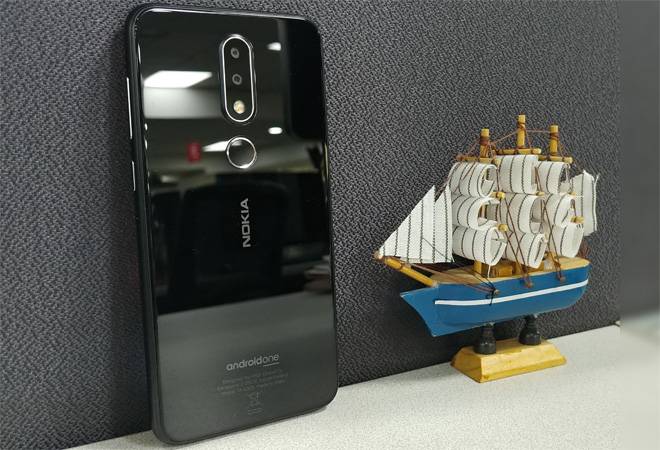
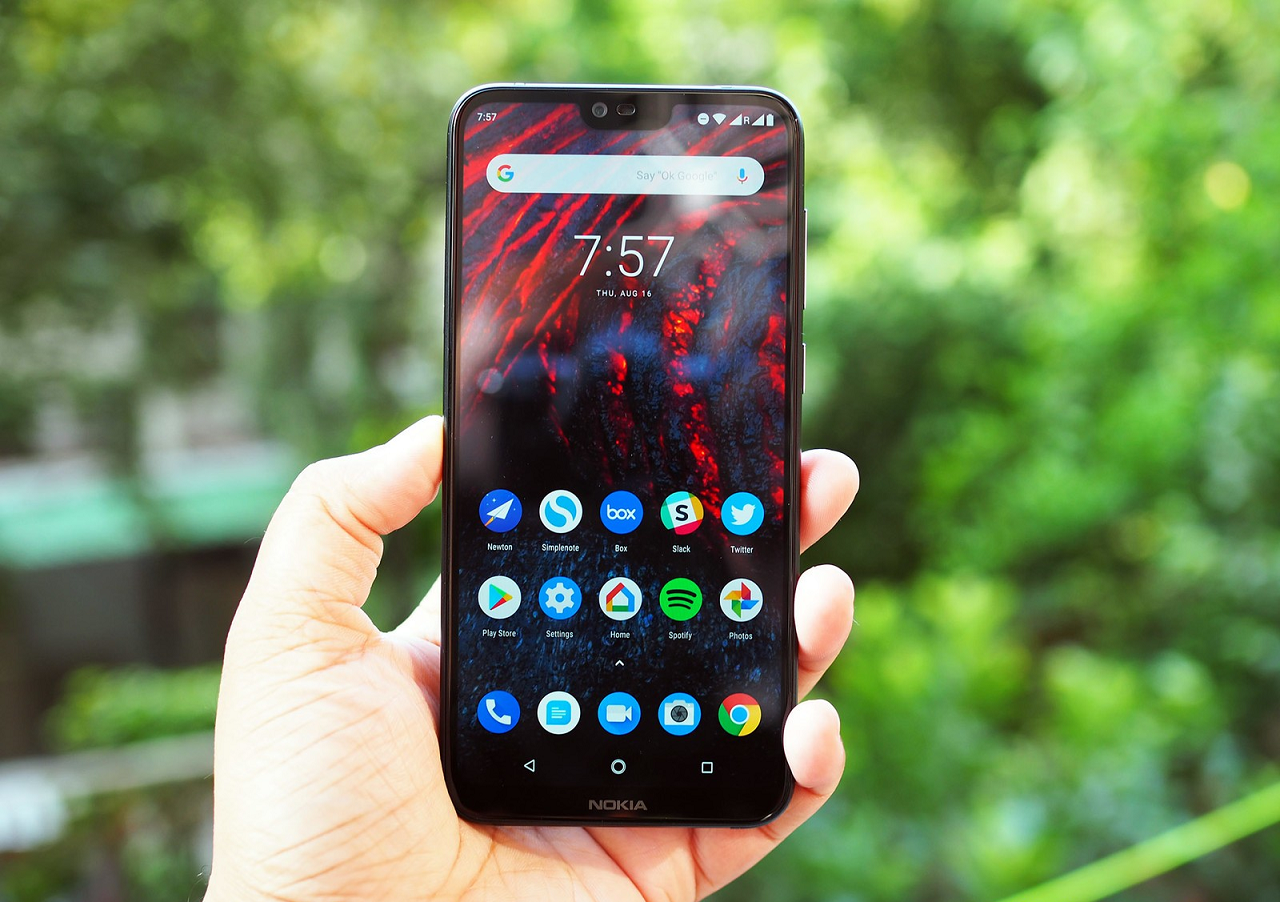
HMD Global has been making great strides re-establishing the Nokia smartphone brand worldwide. Their phones have been getting positive reviews, with the Nokia 7 Plus bagging awards and accolades globally for being a well-balanced Android One device. The Nokia 6.1 Plus aims to follow through the Nokia 7 Plus’ success with the same pure Android experience paired with a more premium build and more affordable price tag. You can buy it here in Philippines through Lazada via Cash On Delivery & Nationwide Shipping.

Display and Design

Nokia 6.1 Plus sports a 5.8-inch full HD+ display with a notch, Nokia 6.1 Plus has an aspect ratio of 19:9 with Gorilla Glass 3 protection. It is wrapped in 2.5D curved glass and comes in three colour options of gloss midnight blue, white and black. The smartphone is also quite compact, slim and light. It was quite a delight moving to this phone from a long list of phones with clunky design. Nokia 6.1 Plus fits perfectly in my tiny hands and even in my tight denim pockets. Colors are vibrant, viewing angles are excellent, and the phone doesn’t have any issues with sunlight legibility.

Performance

Nokia 6.1 Plus is powered by Snapdragon 636, a relatively new chip by Qualcomm, which does its job rather well. The processor and Android One software sit well together. The performance, to put it simply, has been smooth. There was no noticeable lag during our extended testing phase.

Heavy games like PUBG and Asphalt 9 ran with no noticeable frame drops. However, the games automatically slotted into lower graphics for better overall performance. The UI was generally buttery smooth and at times overly responsive. The fingerprint sensor on the back panel is also very responsive and feels like has been borrowed from a flagship.

Android One makes Nokia 6.1 Plus a no-nonsense smartphone. There’s no bloatware on the device and animations are snappy as ever.

Camera

The camera on Nokia 6.1 Plus is a dual lens setup which is capable of producing some good looking pictures. The front camera also meets expectations. The primary set up comes with one 16 MP lens with f/2.0 and phase detection auto focus (PDAF), and another 5MP depth sensor.

In the daylight, images shot on the device are sharp with good details and dynamic range. The automatic HDR mode does its job well in containing highlights. For dimly lit areas, the camera does a decent job in letting more light in but the lack of image stabilisation required me to take multiple shots before getting the final shot. There is noticeable noise in darker areas of the picture. Both in day and night, the colour composition mostly felt accurate.

One area where the camera left us more than impressed was the portrait mode which is called “Live Bokeh” in the native camera application. The second lens does a good job of detecting edges and the pictures turn out to be impressive. The camera can also detect more than one person in the frame and adjust accordingly. One can select their desired level of depth while clicking the picture.

 The front facing camera has a 16MP lens with f/2.0 aperture, it also comes with a portrait mode and it’s no exception when it comes to performance. The edges are clear with sufficient light but the unit could struggle a little in dark environments. All in all, you’ll be more than happy with the phone’s bokeh mode.

Battery

The battery is a 3060mAh unit which seems standard with a display size of 5.8-inch. However, in our usage, the Nokia 6.1 Plus did not disappoint. The phone can last a single day on 100 per cent charge. For context, my average day starts around 7 am and ends around 11 pm. Despite keeping the hotspot on for a couple of hours and gaming sessions that could last for 30 minutes, the battery never died on me. The phone gets Quick Charge 3.0 but the charger in the box does not support it.

Full Specifications:

  • Android 8.1 Oreo (Android One)
  • Dual Nano SIM, Dual-standby, Hybrid
  • 5.8-inch FHD+ IPS display, 2280 x 1080 pixel resolution, ~435ppi
  • 1.8GHz Qualcomm Snapdragon 636 octa-core processor
  • Adreno 509 GPU
  • 4GB RAM
  • 64GB internal storage, expandable up to 400GB via microSD
  • 16-megapixel front camera, f/2.0
  • 16-megapixel (f/2.0) + 5-megapixel (monochrome, f/2.2) dual rear cameras, PDAF, dual-LED flash
  • Fingerprint scanner
  • HSPA+, 4G LTE
  • Bluetooth 5.0
  • GPS, A-GPS, GLONASS, BDS
  • USB Type-C
  • Dimensions: 147.2 x 71 x 8.6 mm
  • Colors: White, Black, Blue
  • 3,060mAh battery, Quick Charge 3.0

Xiaomi Mi A2 Review and Specs

More and more low-priced phones have been coming out featuring performance and camera quality unheard of even a few years ago. Last year’s Xiaomi Mi A1 was good example of this. This year, its Android One successor, the Mi A2, goes even further. You can buy it here in philippines through Lazada via Cash On Delivery.

Display and Design

Xiaomi Mi A2 packs a 5.99-inch Full HD+ IPS LCD Display. It’s a half-inch bigger than its predecessor, with a new 18:9 aspect ratio, but the overall footprint of the Mi A2 is pretty much identical to the Mi A1. It has a 1,080 x 2,160 resolution with a pixel density of 403 ppi — not bad given its size — ensuring crisp detail.

Despite being an LCD, the panel offers decent contrast and bright, but not over-saturated colors. If you like Samsung displays you might find it a little undercooked. If you prefer a more neutral palette you’ll likely not mind. The Mi A2 has pretty decent viewing angles and good touch response, but its brightness leaves a little to be desired. The Mi A2 is still legible outdoors in anything but the most intense midday sun, but you’ll likely need to bump up your brightness. In fact, you’ll probably find yourself always keeping the Mi A2 screen at a higher brightness percentage than usual. 

The build quality of the Xiaomi Mi A2 is excellent, building on the classic styling of the Mi A1. The discrete antenna bands, brushed aluminum, and smooth lines of my black unit give it a pebble-like look. Just don’t go dropping it in any rivers though — there’s no IP rating. The all-aluminum back is grippier than most glass-backed phones. It handles general wear and tear better too. The design is about as unassuming as most other phones these days, with fairly small bezels surrounding the display and a familiar iPhone X-like layout on the back for the vertically stacked dual cameras. The rear-mounted fingerprint scanner is good and reliable, though not as fast as higher-end sensors. In many ways the hardware just gets out of the way here, providing a clean foundation for the software. The Mi A2’s design won’t necessarily inspire you, but it’s equally unlikely to make you cringe.

Software and Performance

The Xiaomi Mi A2 runs stock Android 8.1 Oreo with the August security patch. It’s a nearly-unadulterated version of Android with only a few additions. The Camera and Feedback apps can’t be uninstalled, but Mi Community, Mi Drop (local file sharing app), Mi Remote (for the IR blaster), and File Manager (a more powerful file manager), can all be removed if you don’t want them.

If you’re familiar with stock Android, you’ll find yourself immediately at home here. Launcher 3 is your launcher, the Quick Settings and notifications drop-down are untouched, and neither are the Settings. Even System UI Tuner is there. Google’s other apps are pre-installed as well: Calculator, Calendar, Chrome, Clock, Contacts, Drive, Duo, Gmail, Google, Maps, Messages, Phone, Photos, Play Movies, Play Music, Play Store, and YouTube.

The Mi A2 includes the new Snapdragon 660 mobile platform (up from the 625 in most other comparable Xiaomi phones). The 14nm 660 comprises four high-performance Kryo 260 cores clocked at 2.2GHz and four low-energy Kryo 260 cores at 1.8GHz. The GPU is the Adreno 512. This processing bump is noticeable throughout the Mi A2. 

There are a few RAM and memory configurations: 4GB of RAM with 32GB or 64GB of storage, and 6GB of RAM with 128GB of storage. I used the 4GB/64GB version for this Xiaomi Mi A2 review. At the time of this review, the only version available in India is the 4GB/64GB version, with the 6GB/128GB version coming later. There is no microSD expansion on the Mi A2, which makes the 32GB version hard to recommend. 

Camera

The Mi A2 has a primary 12MP, f/1.75 lens and a secondary 20MP, f/1.75 lens. Unlike the Mi A1, there’s no longer a 2x optical zoom lens. Now the secondary lens is dedicated for low light shooting, though it also helps for portrait mode bokeh effects. The Mi A2 uses pixel binning to combine light data from four adjacent pixels on the 20MP sensor into two-micron Super Pixels, resulting in a 5MP image that’s upscaled back to 20MP resolution.

The front-facing camera uses the same 20MP sensor at f/2.0 aperture. It also offers front-facing HDR, a 4,500K selfie light and portrait mode. In the camera’s app portrait mode, the Mi A2 will automatically choose the best camera for the conditions. The rest of the time you’ll have to manually switch to the 20MP sensor by swiping over to Manual mode and tapping the button on the side. Despite what you might have read elsewhere, the Mi A2 only switches automatically in portrait mode, which is not all that great.

The Mi A2 offers auto HDR on both the rear and front-facing cameras. There are AI beautification modes if you’re into that kinda thing, a front-facing flash for low-light selfies, a good panorama mode, filters, and a straighten option to correct your wonky horizons. For video, there’s support for 4K at 30fps, FHD at 60 and 30fs, and HD at 30fps. Video stabilization only works well at FHD and it’s best during daylight hours. While the stabilization is still there at night time, it’s much easier to spot, and thus less effective, thanks to the shuddering lights in the footage. There are also slow-motion and time-lapse videos.

Battery

The Xiaomi Mi A2 has a svelte 3,000mAh battery in order to fit into that ultra-slim chassis. While battery life wasn’t bad, the thought of the larger battery Xiaomi could’ve put in a slightly thicker device persisted. Had Xiaomi opted for a 3,500mAh battery that concern would have been quashed and we’d still have a super-thin phone. Of course, this would have stepped on the toes of the Mi A2 Lite’s 4,000mAh cell (and non-existent camera bump).

The combination of stock Android with no bloatware and the economical Snapdragon 660 means you’ll still get a decent day’s usage out of the Mi A2. At my standard screen brightness (around 50 percent) I consistently managed over five hours of screen-on time. Battery life was perfectly acceptable, but not groundbreaking. The LCD display and more power-hungry chipset are the most likely culprits here.

The global Mi A2 unit (which I have) supports 5V/2A charging via Qualcomm’s Quick Charge 2.0. The version available in India will support Quick Charge 4.0, although you won’t get a QC4 charger in the box; it’ll be 10W no matter where you are.

There’s only the standard battery-saving mode in Android Oreo, but Android Pie will bring Adaptive Battery and Adaptive Display to help eke out a little more from the Mi A2’s diminutive battery. Fast charging the 3,000mAh battery takes an hour and a half.

Full Specifications:

  • Android 8.1 Oreo, Android One
  • Dual SIM, Dual standby
  • 5.99-inch FHD+ IPS display, 2160 x 1080 pixel resolution, ~403ppi
  • 2.2Ghz Qualcomm Snapdragon 660 octa-core processor
  • 4GB/6GB RAM
  • Adreno 512 GPU
  • 32GB/64GB/128GB internal storage, non-expandable
  • 20-megapixel front camera, 1.0µm, f/2.2, LED flash
  • 20-megapixel (1.0µm, f/1.8) + 12-megapixel (1.25µm, f/1.8) dual rear cameras, LED flash
  • AI photo modes, HDR
  • Fingerprint scanner
  • HSPA+, 4G LTE
  • WiFi 802.11 a/b/g/n/ac, dual-band
  • Bluetooth 5.0
  • GPS, A-GPS, GLONASS, BDS
  • FM Radio
  • USB Type-C
  • Infrared blaster
  • Dimensions: 158.7 x 75.4 x 7.3mm
  • Weight: 166g
  • Colors: Gold, Rose Gold, Blue, Red, Black
  • 3,000mAh non-removable battery, 10W charger

VivoY81i Review and Specs

Vivo may be becoming more aggressive in the midrange and premium segments, but that doesn’t mean they’re letting go of the budget range just yet. The Y81i is a testament to that, and it just unveiled itself in Malaysia. It’ll retail for MYR 599, which converts to around US$ 144. Here in the Philippines you can buy it for ₱6,999 through Lazada via Cash On Delivery.

Display, Design and Hardware

The Vivo Y81i is a more toned-down and affordable version of the Y81. This cheaper variant retains the iPhone X-like design that the latter has, with the same 6.22-inch 1520 x 720 HD+ resolution screen. Since they sport the same design and screen size, it’s hard to tell these two devices apart just by looking at them. They also have identical specs across the board as the only main compromise here is the processor used.

The Y81i is a toned-down version of the Y81i, sporting a less powerful MT6761 processor compare to the MediaTek Helio P22 of Y81. It has 2GB RAM and 16GB internal storage expandable via microSD up to 256GB.

Camera, Software and Battery

Coming to cameras, the front notch houses a basic 5MP selfie sensor with f/2.2 aperture and AI Face Beauty while the rear houses a 13MP sensor. The front camera comes ready with face unlock as the handset doesn’t have a fingerprint reader. In terms of connectivity, the Vivo Y81i offers 4G LTE, Wi-Fi, micro-USB 2.0, USB OTG, and GPS. There’s also a Motorbike Mode for commuters that rejects calls and alerts senders of the receiver’s current status. The Vivo Y81i comes with a similar 3260mAh battery pack to the Y81 and weighs 143 grams. It will be offered in Red Black and Blue color options. On the software side of things, the Vivo Y81i comes with Android 8.1 Oreo-based Funtouch OS 4.0 which is Vivo’s own custom skin on top of Android. The battery is the same as the Y81 with 3,260mAh capacity which is good enough for up to single day of usage.

Full Specifications:

  • Android 8.1 Oreo, FunTouch OS 4.0
  • Dual SIM, Dual Standby (nano)
  • 6.22-inch HD+ IPS display, 1520 x 720 pixel resolution, ~270ppi
  • MediaTek Helio A22 quad-core processor
  • 2GB RAM
  • 16GB internal storage, expandable via microSD up to 256GB
  • 5-megapixel front camera, f/2.2
  • 13-megapixel rear camera, f/2.2, LED flash
  • Face Unlock
  • HSPA+, 4G LTE
  • WiFi 802.11 a/b/g/n/ac
  • Bluetooth 5.0
  • GPS, A-GPS, GLONASS
  • FM Radio
  • microUSB 2.0
  • Dimensions: 155.06 x 75 x 7.77mm
  • Weight: 143g
  • Colors: Matte Black, Red
  • 3,260mAh Li-Ion non-removable battery

Redmi Note 6 Pro Review and Specs

Xiaomi’s success has been built upon a simple formula: offer powerful hardware at aggressive prices to undercut the competition. One recent example of this strategy was the predecessor to the Redmi Note 6 Pro. With the Redmi Note 5 Pro, the Chinese manufacturer has been very hard to beat around the $200 price mark thanks to the use of the Snapdragon 636 SoC. The device has been extremely popular, so naturally, that increases the expectations we have from its successor, the Redmi Note 6 Pro. Here in the Philippines you can buy it through Lazada via Cash On Delivery.

Build and Design

Redmi Note 6 Pro has a 6.26-inch display with 19:9 aspect ratio. A resolution of 2260 x 1080 pixels with  403ppi pixel density. There is a notch cut-out at the top, something that the Redmi Note 5 Pro did not have—but since almost every new phone has a notch, we really cannot hold that against anyone. The display is a tad richer than before, and the extra real estate makes it even better to navigate between apps. There is a very slight reflectiveness if there are annoying overhead lights, but the automatic brightness changes adapt quickly enough. 

Software

Redmi Note 6 Pro runs the company’s custom MIUI skin. You get the latest version, i.e. MIUI 10, based onAndroid 8.1 Oreo. With the competition already pushing out updates to Android Pie, Xiaomi could have launched the Redmi Note 6 Pro with the latest version of the OS. 

Xiaomi’s custom UI has a few visual tweaks such as a new app switcher layout that looks fresh. You still don’t get an app drawer, and all app icons appear on the home screens when installed. Like most other smartphones with notches, you have the option to mask the notch with a black band. You also get theme support so you can customise the look of the smartphone.

Xiaomi preinstalls quite a number of apps including Google’s entire suite, Mi Drop, Cleaner, UC Browser, Mi Remote, Mi Store, Mi Community, Amazon Shopping, Facebook, NewsPoint, and Dailyhunt plus a few others. During our review period, we had Dailyhunt and Mi Video constantly spamming us with notifications.

A swipe to the right from the first homescreen gives you card-style updates, shortcuts for apps, and widgets for things like stock prices, and checking train PNR numbers. There’s even a panel for Ola that opens the app if installed or redirects you to the company’s webpage to let you call for a cab. You also get calendar reminders here and shortcuts for Swiggy, Redbus, and BigBasket. We found ads in apps including Mi Music and Mi Video, which got really annoying.

There are gesture shortcuts on the Redmi Note 6 Pro which let you take a screenshot or launch the camera app. You also get the option to switch to fullscreen gestures instead of the on-screen Android navigation buttons. We found a new Enterprise mode that, from the looks of it, lets you create a separate enterprise profile. The Redmi Note 6 Pro shows you a list of fullscreen-compatible apps and gives you the option to force non-compatible apps to run in fullscreen mode.

Camera

This is a camera beast housing dual camera setup at the front as well as the rear. The one at the back has a 12MP sensor with 1.4 micron pixel size and f1.9 aperture for capturing more light along with a 5MP depth sensor for bokeh images. The camera app UI is neat and intuitive to use. Various camera modes including short video, video, photo, photos, square, panorama and manual, are placed at the bottom, making it easier to switch modes while capturing an image.

There is the new AI scene detection icon at the top that can identify up to 32 scenes and quickly detected human faces, text and more that captures great images. Although while capturing bokeh images, the camera suggested placing the objects within 2 meter range, even if the subject wasn’t within the given range, it still managed to capture decent bokeh image. There are some image editing options for bokeh images too. This includes adjusting background blur level, adding studio lighting on faces, and adjusting background light trails. Post adjusting the light trail, I was able to save the image as a short 3 second video. The camera does a pretty impressive job of capturing natural looking colours while retaining details in normal photo mode as well as portrait mode.

There has been a significant improvement in the front camera module. Unlike the previous generation models, where bokeh selfies were captured using AI software, this one comes with a 20MP primary sensor along with 2MP secondary sensor. The selfie camera seamlessly identifies the face and blurs the background. The beautification setting with the Portrait mode helps in capturing Instagram ready images as it smoothens the skin tone and offers additional advance settings, eliminating the need of using an image editing software.

Performance andBattery

The phone runs on Mi Global UI 10.0 stable built on Android version 8.1.0 and successfully managed to handle daily usage including fetching emails, gaming, and photography along with web browsing, streaming videos, social networking and calling. The phone is powered by Qualcomm Snapdragon 636 SoC (same as on Redmi Note 5 Pro) and my review unit had 6GB of RAM and 64 GB onboard storage with support for expandable memory. The security app can be used to optimise the performance along with learning cache and obsolete files, analyse battery usage and boost speed. The 4000 mAh battery lasted me close to two days on a single charge.

Full Specifications:

  • Android 8.1 Oreo, MIUI 9
  • Dual SIM, hybrid
  • 6.26-inch FHD+ IPS display, 2280 x 1080 pixel resolution, ~403ppi
  • 1.8GHz Qualcomm Snapdragon 636 octa-core processor
  • 3GB RAM
  • Adreno 509 GPU
  • 32GB internal storage, expandable via microSD up to 256GB
  • Fingerprint scanner, Face Unlock
  • 20-megapixel + 2-megapixel front camera
  • 12-megapixel + 5-megapixel dual rear cameras, LED Flash
  • 4G LTE
  • WiFi 802.11 a/b/g/n/ac
  • Bluetooth 5.0
  • GPS,GLONASS, Beidou
  • Infrared Blaster
  • microUSB 2.0
  • Dimensions: 157.9 x 76.4 x 8.2mm
  • Colors: Blue, Black, Red, Rose Gold
  • 4,000mAh Li-Po non-removable battery

OPPO A3s Review and Specs: Budget Friendly Smartphone

In general, we often see smartphones with dual cameras in mid-range and high-end smartphones, but now, OPPO brings dual cameras to an entry-level device that is worthwhile. We are talking about the OPPO A3s, which comes with a pair of 13 + 2-megapixel camera. It supports portrait mode, and it comes with 4,230 mAh battery for full entertainment with a 6.2″ HD+ display. The OPPO A3s is one of the most pocket-friendly handsets to come with the trendy notch display design. Here in the Philippines you can buy it through Lazada via Cash On Delivery.

Build and Design

OPPO A3s packs a 6.2-inch HD+ (720 x 1,520 pixels) In-Cell IPS LCD “Super Full Screen” display with a 19:9 aspect ratio and a small cutout on the top that features the front camera and the earpiece. There are minimum bezels to the left and right sides of the display but the bottom bezel is reasonably thick for some reason. The display quality offered by the A3s is impressive. The viewing angles and maximum brightness ensure that the handset remains usable even in outdoor conditions. For those who are wondering, the notch does not bother you few minutes into using the handset and as you have already made the choice of going for a handset with a notch design, it is pretty much a given that you will not be disappointed. The A3s does not feel heavy in the hand and is easy to hold despite a large screen size. The phone also feels sturdy and should survive an occasional fall or two. Overall, the build quality offered by the smartphone is decent, especially for its price range.

Software and Performance

The OPPO A3s uses ColorOS version 5.1 operating system based on Android OS version 8.1 Oreo. The user interface is simple and can customize the home screen, such as changing the wallpaper and themes. There’s a phone management application. For setting up various applications, such as clearing RAM memory, virus scan, or privacy settings, to access the message.bringing the widget to the home screen, and changing the screen unlock effect.

The OPPO A3s uses a 1.8GHz Snapdragon 450 processor, Adreno 506 graphics processor, 2GB of RAM, and 16GB of ROM which is further expandable up to 256GB via microSD card. In terms of gaming performance, the internal specifications may not seem quite good. However, it has a Game Acceleration system that will help manage the memory and optimize for more games.

Camera

 OPPO A3s comes with a rear-facing dual camera setup, which consists of a 13-megapixel primary sensor and a 2-megapixel secondary sensor, supported by an LED flash unit. At the front, we get an 8-megapixel sensor for taking selfies and video calling. The camera setups, both front and rear, presented some exposure issues while clicking pictures for us. Even when we tried to focus on the source of light, a procedure that usually helps in adjusting the exposure, there were prominent lens flare issues presented by the smartphone.

The front camera, just like the rear setup, comes across as a hit-and-miss. Provided apt conditions, the handset can produce some good images but as it is not the case in everyday scenarios, this comes across as a major drawback for the A3s. 

Battery

OPPO A3s packs in a beefy 4,230mAh battery. As you might expect from the capacity, the handset manages to last beyond a day of heavy usage with ease. In our video loop test, the smartphone managed to last 19 hours before running out of battery. This means you can easily take the A3s out for a road trip without caring much about the charger.

Full Specifications:

  • Android  8.1 Oreo, ColorOS 5.1
  • Dual SIM, Dual standby
  • 6.2-inch HD+ IPS display, 1520 x 720 pixel resolution, ~271ppi
  • 1.8GHz Qualcomm Snapdragon 450 octa-core processor
  • Adreno 506 GPU
  • 2GB RAM
  • 16GB internal storage, expandable via microSD up to 256GB
  • 8-megapixel front camera, f/2.2 aperture
  • 13-megapixel (f/2.2) + 2-megapixel (f/2.4) dual rear cameras, LED flash
  • Face Unlock
  • HSPA+, 4G LTE
  • WiFi 802.11 b/g/n
  • GPS, A-GPS
  • FM Radio
  • microUSB
  • Dimensions: 156.2 x 75.6 x 8.2mm
  • Weight: 168g
  • Colors: Dark Purple, Red
  • 4,230mAh non-removable battery


Honor 8X Max (Huge Screen) Review and Specs

The definition of the giant screen Smartphone industry has been constantly changing.  In just 2018, we saw two giant screen phones with screen sizes of 6.9 and 6.95 inches respectively. It can be said that the screen of the mobile phone has broken through 7 inches. Honor released the Honor 8X Max with a 7.12-inch screen. Here in the Philippines you can buy it through Lazada via Cash On Delivery.

The Honor 8X Max is the latest smartphone from the global tech giants Huawei. Huawei may have been facing some setbacks these past few months, but when it comes to their Honor Brand, they’ve been seeing a lot of success. 

Design and Display

The Honor 8X Max is a large tablet, almost phablets style phone. It looks a lot like the recently launched Honor Note 10, particularly from the back. It has a water-drop style notch similarly to the Oppo F9 Pro. 

In terms of shape, the Honor 8X Max has a similar shape to that of the iPhone X making it an elegant and stylish Android smartphone. It is largely rectangular, with trim, rounded corners. Like the iPhone X, it also has no home button; the fingerprint scanner is located at the back of the phone.


The Honor 8X Max is equipped with an unprecedented 7.12-inch screen, which realizes the wonderful three sides border-less design. At the same time, the sleek pearl shape design is integrated into the mobile phone, and the screen ratio is as high as 90.05%. The 7.12-inch screen has a resolution of 2244×1080 and a full-field display ratio of 18.7:9. The narrow bezel design complements the further narrowed screen, giving the Honor 8X Max a grip that is only the size of a 6.3-inch phone.

As a giant screen audio and video equipment, Honor 8X Max use a screen, as low as a 2nit screen to make movies more comfortable in low light condition, and in strong sunlight the screen will automatically brighten, making the phone picture brighter and clearer. In order to further enhance the comfort of viewing, Honor 8X Max also added a low blue light filter to effectively filter the harmful blue light that causes eye fatigue, adjust the color temperature and brightness, and prevent visual fatigue. There is more than 4096 brightness adjustment technology, the brightness is more pleasant.

These also make it the world’s first Rhine eye-certified Smartphone series. For the first time, Honor and Rhine applied the low-blue and light bio-safety certification to the Honor 8X series, which gives the device an eye protection model 2.0 that meets the Rhine standard to better protect our eyes. Therefore, reading with Honor 8X Max, the experience is more comfortable, and its reading mode has a paper-like reading experience, quite powerful.

Software

The Honor 8X Max comes loaded with the Android 8.1 operating system. You can upgrade to the latest available OS whenever you wish. A dual SIM (GSM and GSM) phone that accepts only Nano-SIM on both ports. Both SIM ports provide you with all the latest connectivity options like 3G, 4G LTE, GPS, and Wi-Fi. The Wi-Fi standards supported include 802.11 a/b/g/n/ac. It has Bluetooth connectivity which helps you connect to all sorts of devices like the air pods, portable Bluetooth speaker, or car Bluetooth speaker. You can use the air pods to listen to music wirelessly, accept calls, and operate your phone while it’s still in your pocket. It also comes with the latest sensors you’d expect in a high-end smartphone like fingerprint sensor, accelerometer, compass/magnetometer, proximity sensor, gyroscope, and ambient light sensor. These sensors help to monitor various activities and provide various functions to your smartphone.

Hardware and Performance

The smartphone has a 1.8 GHz octa-core with a Qualcomm Snapdragon 636 as its processor. It also has a 4GB Ram size and a 64GB internal memory size. The Honor 8X Max has an SD Card slot for expandable storage that can be expanded up to 256GB. Some of the internal memory will probably be taken up by the operating system so you should expect to have 58 – 60GB memory space left for your use.

In the comprehensive performance review of Antutu, the comprehensive Antutu score of the Honor 8X Max standard version reached 115354 points, which the CPU score reached 55880 points, and the GPU score reached 21139 points. This performance is sufficient for most everyday applications, and has relatively good game performance and is more practical.

Camera

The Honor 8X Max is equipped with 16MP + 2MP HD dual rear camera, F2.0 aperture, support PDAF high-speed phase focusing technology, focusing speed as fast as 0.2s, not only can watch long movies, but also can grab long movies, and can easily grasp movement.

It has 8MP front camera also with a f/2.0 aperture, which is incredible considering it’s for taking selfies and/or making Snapchat/IG live videos. The phone also has an auto-focus feature that helps to fine-tune the camera’s focus, giving you clearer and better quality pictures. The rear camera also lets you record high definition videos taking full advantage of the 1080 pixels on the screen.  The camera also comes with several other features like the ‘beauty’ feature that lets you glamour up your selfies and pictures. If you’re a budding photography enthusiast, then you’ll love the aperture feature, which gives you full control of the camera aperture. The camera also has full AI support that you can turn on and off.

Audio and Battery

The Honor 8X Max features high-profile dual speakers, not just louder, it also supports Dolby Atmos! Dolby panoramic sound can combine the content of the film to present a dynamic sound effect, and more realistically create a sound effect from far and near. Achieve 360° omnidirectional sound field surround, showing more sound details and enhancing the audience’s viewing experience. At present, most only use a single speaker, and all the sounds come out from only one mouth, which can not fully display the sound field effects in the movie. 

If there is no large-capacity battery, there will be no electricity in minutes! The Honor 8X Max uses 5000mAh of the large battery, and users can also use it for one and a half days. Fully charged to support watching video for 20 hours, playing games for 12 hours, listening to music for 72 hours. The most important thing is that Honor 8X Max supports 9V/2A fast charge, the highest 18W charging power, can charge 31% in 30 minutes, can be full in 2 hours! It also supports OTG fast reverse charging, supports reverse charging of mobile phone 0.5A, and supports fast reverse charging of rechargeable hardware 1A such as charging treasure. It is very convenient to use it to charge the Honor Band 4.

The Honor 8X Max is available in 2 versions, one with a Snapdragon 660 and one with a Snapdragon 636 in lower-priced. The Snapdragon 636 adopts a 14nm process, 8 core kyro260, and the highest frequency is 1.8Ghz. The Adreno 509 GPU is 10% better than the Adlonno 508 of the Snapdragon 630. Performance is 40% higher than Snapdragon 630. The Snapdragon 660 is equivalent to the enhanced version of the Snapdragon 636. The CPU has a higher frequency and the GPU is upgraded to Adreno 512.

Full Specifications:

  • Android 8.1 Oreo, EMUI 8.2
  • Dual SIM, Dual Standby (nano, hybrid)
  • 7.12-inch Full HD+ IPS display, 2244 x 1080 pixel resolution, ~350ppi
  • 1.8GHz Qualcomm Snapdragon 636/660 octa-core processor
  • Adreno 509 GPU
  • 4GB RAM
  • 64GB / 128GB internal storage, expandable up to 256GB via microSD
  • HSPA+, 4G LTE
  • Wi-Fi 802.11 a/b/g/n/ac 5GHz, Wi-Fi hotspot
  • 16-megapixel (f/2.0) + 2-megapixel (f/2.4, depth sensor) dual rear cameras, PDAF, LED flash
  • 8-megapixel f/2.0 front-facing camera
  • microUSB, USB OTG support
  • Fingerprint scanner
  • Bluetooth v4.2, A2DP, FM Radio
  • GPS, A-GPS, BDS, GLONASS
  • Colors: Red, Blue, Black
  • Dimensions: 177.6 x 86.3 x 8.1 mm
  • Weight: 210 g
  • 5,000mAh non-removable battery