Huawei Nova 3i Review and Specs

The Philippines is one of the first markets around the world to get their hands on the new Huawei Nova 3i. Unsurprisingly, this country is one of Huawei’s top priorities, considering the local success of the Nova 2i last year which packs a capable processor, good display, feature-packed cameras, all of which are housed in a sturdy and premium body for an affordable price. With it’s successor Huawei Nova 3i you can buy it here in the Philippines through Lazada for ₱15,990 via Cash On Delivery.

Display and Design

The Nova 3i is equipped with a 6.3-inch FullView Display 2.0 with FHD+ (2340 x 1080) resolution or equal to 409ppi. Given the notch design, it now has a 19.5:9 aspect ratio and boasts an 81% screen-to-body ratio. Users also have the option to lower the resolution to HD+ (1560 x 720) or switch on Smart resolution so it can do it automatically to help save power. There’s also an option to adjust color modes from Normal to Vivid, as well as color temperature from Default to Warm to Cold. In addition, there’s split screen support and you can also hide the notch if you’re not fond of it. The quality of images and texts are sharp while the colors are punchy. Viewing angles are great without showing any color shifting. These are good indicators that it can provide users with a good viewing experience when browsing, watching videos or playing games. When it comes to audio quality, the Nova 3i’s single speaker is loud and crisp enough for casual listening to music, videos, and gaming, as well as hands-free voice calls.

Software

The Huawei Nova 3i runs on Android 8.1 Oreo, which isn’t the very latest version of Google’s OS, but it’s the latest major release. Note that the exact version of Android doesn’t majorly matter as it comes with EMUI 8.2.0 skin on top. 

In all honesty, the EMUI has improved a lot over the years. Although it’s not the best custom skin, it still reasonable fluid and stutter-free on the Nova 3i. It is easy to operate, and despite a different icon pack and other tweaks, it still sticks to the principles laid by Google. 

The EMUI is heavily built skin, which comes with its own advantages and flaws. It packs a lot of neat tricks hiding inside the phone, so if you buy it, you will end up spending a lot of time discovering all its features. My favorites are pick up to reduce the ringing volume or wake your phone, raise to ear to make calls, smart screen resolution, private space and app cloning.

Performance

Powering the Nova 3i is Huawei’s new mid-range chipset, the Kirin 710 octa-core chipset clocked at 2.2GHz and Mali-G51 GPU. So far, it performed great when it comes to ordinary tasks like navigating the UI, launching and switching between apps. The fingerprint scanner and face unlock is fast and responsive that is comparable to the P20 series, and can unlock our device almost instantaneously.

Running multiple apps in the background is not an issue thanks to the 4GB RAM. It also proved to be capable when it comes to gaming as it was able to run Asphalt 9 and Mobile Legends smoothly. PUBG Mobile is also very playable, although you’re limited to Smooth and Medium Frame Rate graphics settings.

Camera

Just like its predecessor, the Huawei Nova 3i’s claim to fame is its quad-camera setup. There’s a 24-megapixel front camera and a 16-megapixel shooter on the back. Both of them  are partnered with a depth-sensing, 2-megapixel sensor.

The 16-megapixel primary camera can take good pictures. However, despite the Artificial Intelligence (AI) mode turned off, there are times where the images Huawei Nova 3i captures still feels like it passed through tons of automatic software post-processing.

The details feel a little soft and the colors look unnatural. But other than those few instances, it can surely take Instagrammable photos. They look sharp, has vibrant colors, and good contrast.

On the other hand, the 24-megapixel front camera takes even better pictures, which isn’t surprising since it boasts a more pixel-packed sensor. It has good colors and contrast, although the quality will be put to waste once you use its novelty features. 

The Huawei Nova 3i also has the AR Lens features. There’s the 3D Qmoji, which is Huawei’s take on Apple’s Animoji. It’s fun to use, but its facial tracking is not as accurate as the iPhone X. There’s also the Snapchat-like effects that add random elements in your face and changes the background. It also comes with a dedicated background music per effect. Probably the most interesting novelty is the 3D Objects. This is the most common exhibition of AR technology. The system can add 3D animations in the on the frame, which moves dynamically as if it’s actually in the real world.

Clearly, one of Huawei Nova 3i’s strongest suits is its cameras. Not just because of the hardware itself, but also because of its intelligent software and capable AI processor.

Connectivity and Battery Life

The Huawei Nova 3i comes with a standard connectivity suite like dual 4G with VoLTE support, WiFi, Bluetooth, and GPS. NFC is absent but not really a deal breaker. Calls are loud and clear while mobile is fast as long as the signal is good in the area. GPS works well with navigation apps like Grab, Google Maps, and Waze.


It packs a 3340mAh battery which can suffice most users with basic day to day tasks like phone calls, streaming content, music and scrolling through long social media pages periodically.


Of course, if you are a smartphone gamer and have a weakness for demanding titles like PUBG Mobile, the one-day battery claim doesn’t apply. The GPU Turbo technology does optimize the battery life, but that’s not enough to stretch the battery life to one day with 3-4 classic PUBG matches and given that you survive for at least 20 minutes. 


The charging speed is a little disappointing on the Nova 3i. The Kirin 710 does not offer Huawei’s 22.5W SuperCharge and instead, it has 10W charging via micro USB. It takes around 2 hours to charge from 0-100%, which is slow considering what competition has to offer. And with Qualcomm’s Quick Charge, a lot of Android users are accustomed to fast charging. 


If you are less smartphone dependant throughout a day, even 80% of the battery can sail you through without needing a charger. So, the battery life is quite good, which would have been sweeter if it had fast charge support.

Full Specifications:

  • Android 8.1 Oreo, EMUI 8.2
  • Dual SIM, Dual Standby (Hybrid)
  • 6.3-inch FHD+ IPS display, 2340 x 1080 pixel resolution, ~409ppi
  • 2.2GHz HiSilicon Kirin 710 octa-core processor
  • Mali-G51 GPU
  • 4GB RAM
  • 128GB internal storage, expandable via microSD
  • 24-megapixel + 2-megapixel dual front camera
  • 16-megapixel + 2-megapixel dual rear cameras
  • 480fps slow-motion video recording
  • Fingerprint scanner, Face Unlock
  • HSPA+, 4G LTE
  • WiFi, WiFi hotspot
  • Bluetooth
  • GPS, A-GPS
  • FM Radio
  • microUSB
  • Colors: White, Black, Gradient Blue
  • 3,340mAh non-removable battery

Pocophone F1 Review and Specs

Xiaomi’s new sub-brand is called “Pocophone” internationally but it’s simply “Poco” in India. High-end specs are no longer tied to high-end phones. It’s crazy when you think about it: you can spend under $500 and get the same core specs you’d get if you paid $1000. Here in the Philippines you can buy it on Lazada for ₱17,990 of the 64GB variant via Cash On Delivery.

Display


The 6.18-inch screen which Pocophone calls the edge-to-edge display has an 18.8:9 aspect ratio and Full HD+ (2246 x 1080) resolution or equal to 403ppi, which is a decent resolution for a screen of this size. The display is nice as it is sharp with good viewing angles and accurate colors. However, it’s prone to glare but the bright screen was able to keep things legible. As for its screen protection, it uses Corning’s Gorilla Glass so it should be able to withstand minor scratches and bumps.

Software

Running the software is MIUI for POCO (MIUI 9.6.11.0 Stable) based on Android 8.1 Oreo which is basically a slightly customized version of Xiaomi’s MIUI. It has multiple home screens but also has an app drawer that you can bring out by swiping up. The apps are pre-arranged by category but you can add your own tab. Other features include the ability to hide the notch, Second Space which allows you to make your own private home screen, Button and Gesture navigation, Dual Apps, a Security app, and App Lock. Since it’s based on Xiaomi’s MIUI, we can expect new features to be developed for it as well.

Performance

Powering the F1 is a Qualcomm Snapdragon 845, Adreno 630 GPU, 6GB or 8GB RAM, and a 4,000mAh battery with QC 3.0. Speed is a big part of Xiaomi’s Pocophone F1 marketing campaign and for good reason – the F1 excels at it. With the top-of-the-line internals it packs, using the Pocophone F1 is a delight. It’s fast and very smooth, with no lag or any jankiness. We didn’t encounter any issues playing graphics-intensive games. In AnTuTu, the model with 6GB of RAM hit scores in the 240,000 to 260,000 range, which is on par with or above many 2018 flagships.

Camera

Moving on with our Pocophone F1 review, the rear camera on the device is a tricky thing. In theory, it sounds great – a dual camera setup comprising a 12MP main sensor and a 5MP secondary one for depth information. In practice, performance is inconsistent.

In most cases, especially in good lighting conditions outdoors, the Pocophone F1 manages to take some brilliant shots with a good amount of detail. The portrait mode too is close to perfect, with excellent edge detection. Xiaomi has almost cracked portrait modes on budget and mid-range smartphones. The 20MP front camera uses Xiaomi’s pixel binning technology to combine data from four individual pixels. The selfies will serve fine for social media posts, but won’t blow you away.

Battery

The battery is excellent. A 4,000mAh unit should keep you up and running for a full day, potentially two, depending on how hard you push it. We were able to get around nine hours of screen-on time on a single charge, with the screen set to 50 percent brightness and a mix of watching video, browsing, using Reddit Sync, and some gaming. When you tap out, you can get back in the game quickly, thanks to the support for Quick Charge 3 with the bundled 9V/2A charger. There’s no wireless charging though.

Full Specifications:

  • 6.18-inch Full HD+ edge-to-edge display @ 2160 x 1080px
  • Corning Gorilla Glass (version not specified)
  • Qualcomm Snapdragon 845 2.8GHz octa-core
  • Adreno 630
  • 6GB/8GB LPDDR4X
  • 64GB/128/256GB
  • expandable via MicroSD up to 256GB
  • 12MP Sony IMX363 + 5MP Samsung sensor rear cameras, LED flash
  • 20MP front camera
  • 4G+ VoLTE
  • Dual-SIM (hybrid)
  • WiFi 802.11 a/b/g/n/ac
  • Bluetooth 5.0
  • GPS, A-GPS, GLONASS
  • USB Type-C
  • MIUI for POCO (Android 8.1 Oreo)
  • 4,000mAh battery w/ QC 3.0

Honor 8X Review and Specs

Honor has released a number of smartphones in 2018 — perhaps too many depending on who you ask — but they all aim to offer exceptional value and build quality that punches well above their price tag. Honor are not known to be flagship-killing mid-range devices, but they have built a steady reputation as solid mid-range, mid-performing devices for the everyday user. With the 8X, Honor has taken its closest step towards offering a phone that looks like a 2018 flagship, at least on the surface. The Honor 8x is available here in the Philippines for ₱12,990 in Lazada which offers Cash On Delivery and Nationwide Shipping.

Design and Display

The Honor 8X looks like the quintessential Honor smartphone, featuring a glossy textured glass back finish with its dazzling light reflecting properties, metal trim, notched display, and eye-catching looks all around. The 91 percent screen to body ratio and minimal chin is undeniably impressive. The standout feature of the Honor 8X, or at least the one that I think is going to sell these phones, is that large 6.5-inch display that adorns the entire front of this device. It’s a 19.5:9, 1080 x 2340 pixels LCD and it looks a lot more expensive than it is. That means that the 8X offers slightly more than Full HD and a pixel density of 397 ppi. The notch is quite wide but it can be hidden in the software.

Software

The Honor 8X launches with Android 8.1 with Huawei’s EMUI 8.2 customization on top of it. It will be familiar to anyone who has had an Honor or Huawei phone in the past. EMUI still has it opponents, but I am a big fan of the level of customization and utility control that is baked into this OS. You have the ability to switch between an iOS-style format with multiple home screen or a stock Android-like app drawer. You can also change the layout of your home screen to have either smaller or larger icons, which impacts how many apps you can fit onto each homes screen. There’s a fair amount of bloatware on the device out of the box including Huawei’s own apps such as HiCare, AppGallery and Health. There’s also a handful of quirky features that we have come to expect from Huawei and Honor. A Party Mode app lets you create a hotspot to share music with other Honor phones users, syncing the music that comes out of all the linked phones’ speakers. There is also a karaoke feature that will play your singing voice back through your headphones for blasting out your favorite tunes.

Performance

The Honor 8X features a Kirin 710 octa-core processor with up to 2.2 GHz. The version I tested had 4GB of RAM. It’s fine for daily usage. Apps launch quickly, and I had no problems with multi-tasking with 2-3 things on the go at once.

This is not a high-performance phone though, and when pushed to the limits, you start to see some of the cost-cutting measures that were required to get the 8X down to this price point.

In terms of audio performance, there is nothing much to report. The sounds quality isn’t amazing, not terrible. Fine for watching videos at low volume, but I wouldn’t want to listen to music out of it. The speaker is on the right-hand side so it’s easy to avoid covering it with your hand in landscape mode.

Camera

Camera performance is usually the first sign of economy in the smartphone business, but it’s not as obvious here as on a lot of mid-range devices. The dual camera on the back, featuring 20MP and 2MP sensors.

The ultra-low light mode is back as is a synthetic wide aperture feature for those bokeh shots that everyone wants these days. You also get the same AI camera tech in the 8X that you’ll find on Huawei’s flagships phones. The camera can identify 50 different objects from 22 categories and will automatically optimize a variety of settings according to what you’re shooting. The recognition part works great, and you’ll get a text flash up on your display while you point the camera so you can check that the AI is seeing what you are. When it comes to actual results, however, I found mixed results. AI camera tech tends to be a little too strong in my experience. It’s almost like the software wants to make it obvious that it has changed something. You’ll often find over-saturated, overly-punchy images. You can always deactivate it with a single tap, though. The maximum resolution for shooting video is 1920 x 1080 at 60 fps.

Battery Life

With a 3,750mAh battery, the Honor 8X has no problem surviving a full day with even the most demanding user. A second day of full use will be on the cards for most, although taking lots of pictures and gaming will knock a couple or so hours off the total on time. Lighter users could well extend usage well into a third day, as was the case when I only used the phone for some web browsing and music streaming. 

If for some reason you find yourself short of juice, the Honor 8X packs in two power saving modes. The regular power saving mode limits background activity, reduces visual effects, and turns off email syncing to save on power. The more extreme ultra power saving mode limits the phone to just a selection of apps to greatly extend battery life up to several days.

Honor 8X Specifications:

  • 6.5-inch 19.5:9 Full HD+ (1080 x 2340) IPS display, 397ppi
  • HiSilicon Kirin 710 2.2GHz octa-core CPU
  • Mali-G51 MP4 GPU
  • 4GB RAM
  • 64GB/128GB storage
  • microSD up to 256GB (dedicated slot)
  • 20MP f/1.8 PDAF + 2MP rear cameras, LED flash
  • 16MP f/2.0 front camera
  • 4G LTE
  • WiFi 802.11 a/b/g/n/ac
  • Bluetooth 4.2
  • GPS, A-GPS, GLONASS, BDS
  • Fingerprint scanner
  • micro USB, OTG
  • EMUI 8.2 (Android 8.1 Oreo)
  • 3,750mAh battery
  • 160.4 x 76.6 x 7.8 mm
  • 175 g

Sparc 32″ Smart TV Review and Specs

The most affordable Smart TV in Lazada as of now is Sparc 32″ Smart TV which you can get for as low as ₱4,999 during sale but has a regular price of ₱5,607 to 
₱5,999, you can choose the Cash On Delivery as payment option. The unit comes with free wall bracket already so you don’t have to worry about it when you decide to mount it on a wall, it has also a stand when you choose to let it sit on a rack.

Like other expensive Smart TV’s out there, this is wifi ready. You may connect online and install many different APPS. You can stream YouTube videos, watch on Netflix, view Facebook posts and other social media, play games, sports, weather, and more. You can even connect a USB keyboard and USB mouse, and you already have a home PC for surfing the web. You may also connect a USB camera and install Skype for video calling with your loved ones. It also comes with VGA cable socket for connecting to your CPU. It has SD card port, Headphone Jack if you wish to plug in some speakers to maximize the experience, has AV ports as well for DVD players and a LAN port if you wish to connect it to the Internet and a port for analog antennas. All ports are located at the back of the TV.

The 32″ display uses the AMOLED technology which is ideal for the High-Definition display. The display quality of this TV is exclusively good, and you may view a movie of 1080p with the overall image quality as clear as crystal. The colors are also distinctly clear, and the sound system is smooth, thus offering you an overall good TV viewing experience. With response time is between 5ms – 10ms, refresh rate is 60 Hz, and the clear motion rate is 200, the result is seamless motion imaging for a truly immersive viewing experience without the motion judder, blurring, and ghosting.

Key Specifications

  • Backlight Type: DLED
  • Screen Diagonal: 32 “
  • Aspect Ratio: 16:09
  • Resolution: 1366×768
  • Refresh Rate: 60Hz
  • Luminance: 200 cd / m2 ± 10%
  • Contrast Ratio: 5000: 01: 00
  • Display Colors: 16.7M
  • Connectivity: VGA, HDMI x 2, USB x2
  • Wifi ready
  • Bluetooth
  • Android 4.4 Kitkat
  • 1GB Ram 8GB Rom
  • Tuner/Reception/Transmission: Video Playback: NTSC, PAL, Digital TV: NTSC, MPEG Support: MPEG2, MPEG

The Platinum Kool Sound Junior Lite KS-5 DVD Karaoke Player Review and Specs

Filipinos love to sing especially during occasions (birthday, reunion, wedding, even through mourning…etc.) For those who want to take their stress out by belting high notes, for the musically inclined–or non-inclined–barkada who just want to have a great time, or for your own personal jamming at home, you now have a perfect avenue to sing your hearts out with the The Platinum Kool Sound Junior Lite KS-5 DVD Karaoke Player. It’s availabe in Lazada for ₱1,799.00 with FREE Platinum KS-5000 Wired Microphone through Cash On Delivery.

Built and Design

The main unit or the karaoke player itself is compact and lightweight. There are 2 slots for microphones in front, together with the disc slot, power button, eject button, and the USB port. Design is minimalistic, nothing fancy, or extra unnecessary stuff. It has a premium appeal to it, albeit being simple. It might be because of its black and glossy surface.

On the rear, you can see the AV ports. It is just the basic and common audio/video out. There is a left and right port for the audio, cant complain on that as this is only a cheap model. There is also a coaxial port. Written on the back, is its power consumption of just 10 watts. This unit is also autovolt, can be plugged on 110-250V AC. The power cord is not too long at just not more than 3ft.

User Interface

The user interface is very simple, you only have the eject and power button at the front. All other controls are on the remote control. This is a big problem when your remote control ran out of battery. You won’t be able to use this machine without the remote control so be careful.

It has 2 mic input but it only comes with 1 mic. There is only 1 volume control for the mic so you won’t be able to control the individual mic volume in case you want to use 2 mics. This is a problem if you are using a different mic for your second mic or when the other singer has louder voice. There is also only one control for echo which has 8 levels.

Display Output

The image quality of the display output is perfect on an HD TV (720p). On a Full HD TV (1080p), the pixelation of the lyrics text is noticeable but isn’t much of an issue. It is still crisp and easy to read. I do not have the exact specs of what is the actual display output of this device, but even it is designed for just an AV cable output, the display for bigger screen is pleasant. It is very easy to operate even without reading the manual. Just plug the unit on your wall socket, connect the AV cables, insert the disc, wait for it to load and you can now start inputting song numbers.

Specifications:

  • Storage: DVD dual layer 8.5GB
  • Multiple Background Videos
  • Supports music and video playback via USB interface
  • DVD movie and music function
  • Intelligent song scoring
  • On-screen song search
  • 9,709 English and OPM songs
  • Power: AC110-250 50/60 Hz
  • Remote operation controls
  • USB 2.0 (input)
  • Infrared Remote Sensor
  • Composite Video Out
  • RCA Audio Out (stereo)
  • Resolution:4:3 aspect ratio; 640p x 480p 16:9 aspect ratio; 854p x 480p
  • 2 Microphone input
  • For Best Performance Please Use Platinum Microphone Only


Xiaomi Redmi Note 5 Ai Review and Specs

Xiaomi one of the world’s largest smartphone manufacturers is especially known for its budget handsets that have a premium design and are great value for money. These attributes have kept the demands of Xiaomi Phones in various countries. They have launched 32GB variant of the Xiaomi Redmi Note 5 AI which is one of the contenders for the best smartphones under $200. Here in the Philippines you can purchase it through Lazada via Cash On Delivery for as low as ₱8,619 for the 32GB variant and 
₱11,290 for the 64GB variant.

The Xiaomi Redmi Note 5 AI comes with an Octa-Core Snapdragon 636 Processor paired with a hell of a capacity of RAM. It comes with 3 Gigabytes of RAM, which is impressive for a smartphone at this price point. It also comes with a base storage of 32 Gigabytes. The screen on this device is a 5.99-inch IPS panel that has a resolution of 1080 x 2160 pixels. This phone has very less bezel hence the 18:9 aspect ratio display. The display is a relatively sharp one with a pixel density of 403 ppi.

Camera

The camera setup on this device is an interesting one. The primary camera on this device is a dual setup with a 12 Megapixel f/1.9 and 5 Megapixel f/2.0 sensor. Xiaomi’s cameras have not always been the best in the market, but this time we might see some nice improvements in the camera section. The front camera on this device is trendy. The front camera has a 13 Megapixel f/2.0 sensor, which is accompanied by a LED Flash. As the name suggests, the selfie shooter is enriched with the Artificial Intelligence and that is what differs it from the Redmi Note 5 Pro. Well, after the 20MP sensor on the Pro. With the wide aperture and larger pixel size, the details of the subject look sharp and clear. The device also takes some appealing selfies with natural like beautification because of the AI. Furthermore, despite the presence of a single camera, there is a portrait selfie mode. Since the portrait selfie from the device is entirely through the software tweaks, the smartphone fails to distinguish the foreground and background details quite accurately. Nonetheless, the portrait selfies are duly remarkable considering the price.

Talking about the video, the smartphone is only capable of recording Full HD videos at max. The Snapdragon 636 chipset is capable of recording video at maximum 4K resolution. So I could not understand why Xiaomi had to limit its potential. Nonetheless, Xiaomi has promised to introduce the 4k recording feature in the next update.

Security

Fingerprint sensor is located at the back and it works fast and accurate. The phone also has a Face Unlock feature but activating the feature was kind of tricky. The feature was accessible only when the region was set to India. It is weird, right? I still cannot understand why Xiaomi is providing features like that just in the specific locations. Nonetheless, the Face Unlock on the device is fast, which is really appreciable.

Battery

The Xiaomi Redmi Note 5 AI comes with a whopping 4000mAh battery, which provides around 9 hours of screen on time. This humongous battery delivers enough horsepower for two days on the normal usage. However, the charging process is quite bothering. The smartphone takes around 2 and half hours to get refilled from 0 to 100% and that too with the stock charger. But since the device supports Quick Charge 3.0, the users can buy a decent QC 3.0 charger to avoid plugging the handset to the charger for a longer period of time.

Lenovo K5 Play Review and Specs

Lenovo K5 Play can be purchase through Lazada via Cash On Delivery for 
₱5,999. It has a curved edges designed to be bezel-less with 18:9 ratio display. Lenovo K5 Play boasts of a 5.7 inch screen size, IPS LCD capacitive touchscreen, 16M colors and a display resolution set at 720 x 1440 pixels, at a 282 pixels per inch density. The Android 8.0 Oreo based Lenovo K5 Play should offer a decent viewing and gaming experience with a 282 pixels per inch density.

Design and Memory

Lenovo K5 Play comes with a body dimension measured at 153.8 x 72.6 x 7.9 mm (6.06 x 2.86 x 0.31 in) and weighs in at 155g which is quite light. Looking at the back of the Android 8.0 Oreo based Lenovo K5 Play is the primary camera and fingerprint scanner centrally positioned below the primary camera.

As far as inbuilt storage and RAM size is concerned; Lenovo K5 Play comes in 16GB or 32GB internal memory variants. Lenovo K5 Play comes in 2GB and 3GB RAM size variants. The Smartphone should offer an excellent audio experience courtesy of its dedicated mic and active noise cancellation feature.

Operating System and Performance 

Lenovo K5 Play runs on Android 8.0 Oreo operating system supported with ZUI 3.7 which offers features such as easy customization, security, easy update and a user friendly interface. The Hybrid dual-SIM (Nano) Lenovo k5 Play is powered by Qualcomm MSM8937 Snapdragon 430 chipset, Octa-core 1.4GHz Cortex-A53 processor supported with Adreno 505 graphic processor, 3 GB of RAM LPDDR3 e 32 GB XMMUM eMMC storage. Even if the SoC could make someone turn up their nose, in the daily experience and based on a basic use of the device, the performances are not frustrating. We have no lag and slowdowns, at most a slight latency in the opening of applications, especially the heavier ones or those that are not present in the background.

A fundamental note: it is good to unlock the Developer options and set it to 0.5x Scale animation windowtransition animation e animator duration. This is a useful operation to increase the responsiveness of the smartphone (without losing anything from the point of view of the animations).

On the gaming side, we have the GPU on board Adreno 505, which is effective with the softer titles. Playing Hearthstone will be a real torment, while with Asphalt 8 you will be able to finish a game without letting out some bad word, even maintaining a high quality. In a nutshell, with the hardest titles you could have some headaches, but if well optimized, there should be no frustration (even if you do not keep a very high frame rate). Furthermore, long sessions of play correspond to a not inconsiderable increase of the temperature of the SoC, which will tend to heat up.

Camera and Battery

Lenovo K5 Play features dual primary camera, the dual lens camera set up is 13-megapixels (f/2.2 aperture) + 2-megapixels (f/2.4 aperture), auto-focus, LED flash, while the front selfie camera is 8-megapixels, auto-focus, f/2.0 aperture, LED flash.T
he secondary sensor is a module intended exclusively for depth and gives its best in combination with the software via the mode dual, present in the settings of the camera. Good shots with bokeh effect: it’s possible change the intensity of the blur and the end result is often very satisfying. The sensor and the software are able to better cut the subject in the foreground and allows you to get good shots from this point of view, even if there are defects.

As for the battery capacity; The Hybrid dual-SIM (Nano) Lenovo K5 Play boasts of a non-removable Li-ion 3000mAh battery  with lower consumption and with fast charge.

Connectivity and Audio Quality

The smartphone is equipped with one Dual SIM 4G hybrid slot: it is possible to insert two cards or a SIM and a microSD; moreover you can benefit from the Volte if the operator allows it. Calls are clear and with a normal volume while no reception problems have emerged. There 20 band è absent so it may be difficult to connect under the 4G network in some areas, unlike a device with the aforementioned band. On the whole there have never been critical situations and the network has disappeared only in very difficult areas, remaining stable in the most covered and most central areas.

Bluetooth 4.2 it is stable and we have not found problems of coupling with multiple brands of wireless headphones and speakers. The NFC is missing but we have the FM radio and the Dual Band 802.11 a / b / g / n Wi-Fi. Finally, GPS / A-GPS / GLONASS took us to our destination without any hassle.

Along the lower edge we have a single speaker, a module characterized by a satisfactory volume but which tends to croak slightly. Average solution, which will not fail to please the less demanding.


Lenovo K5 Play Specifications:
5.7-inch 18:9 IPS HD Display @ 1440 x 720 resolution
Qualcomm Snapdragon 430
Adreno 505 GPU
2GB/3GB RAM
16GB/32GB internal storage
Expandable via microSD up to 128GB
13MP f/2.2 + 2MP f/2.4 dual rear cameras with LED flash
8MP f/2.0 front camera
4G LTE
Dual nano-SIM, Dual Standby
Wi-Fi 802.11 a/b/g/n
Bluetooth 4.2
Fingerprint scanner
Android Oreo (ZUI 3.7)
3,000mAh battery
153.75 x 72.6 x 7.85 mm
155 g
Jazz Blue, Modern Gold, Punk Black

Traveling Tips For Family Holidays

1.Buy Vacuum Seal Bag
Not sure how on earth you’re going to fit everything into your luggage? Get your hands on some vacuum seal bags through Lazada via Cash On Delivery – when clothes are put in these and the air is sucked out with a vacuum cleaner, the bag shrinks and takes up minimal space. You’ll amaze yourself with just what you can fit into a suitcase and carry-on bag.

2. Arrive at the airport with plenty of time to spare
Most domestic flights recommend arriving at the airport two hours before a flight, and three hours for international flights, but it’s worth adding some extra time to that so you can allow for any delays. Once you’re at the airport, try and scope out a children’s play area (many airports have them, check your airport’s website) to tire little ones out so they (hopefully) sleep on the plane. That will also give you time to sort out any last-minute tasks like organizing currency exchange or buying last-minute toiletries, without needing to rush.

3. Make sure everyone is wearing comfy clothes                                                     Kids may look adorable in a specially designed travel outfit, but if they’re uncomfortable, they’ll be unhappy (and so will you!). Dress them in soft, baggy layers, or even pajamas. Kids will love the novelty of being able to go out in their night-time wear, and if you bring a pillow along too, they can snuggle up and (hopefully) drift off to sleep on the plane. The same goes for you – with everything else you’re trying to deal with on a flight, at the very least, you want to be comfy. Wear loose-fitting clothing that you can relax and easily move around in.

4. Sign up for an airline loyalty program 
If you travel regularly, consider signing up to an airline loyalty program, as it’s a great way to earn points and use them towards free trips and upgrades. By flying with the same airline when you travel you’ll find it easier to stick to a familiar routine, too. It’s not worth saving $50 on a budget airline only to find yourself in unfamiliar territory. With a regular airline you generally know what to expect. Plus, by earning points you might also be able to make the most of airport lounges before you fly.

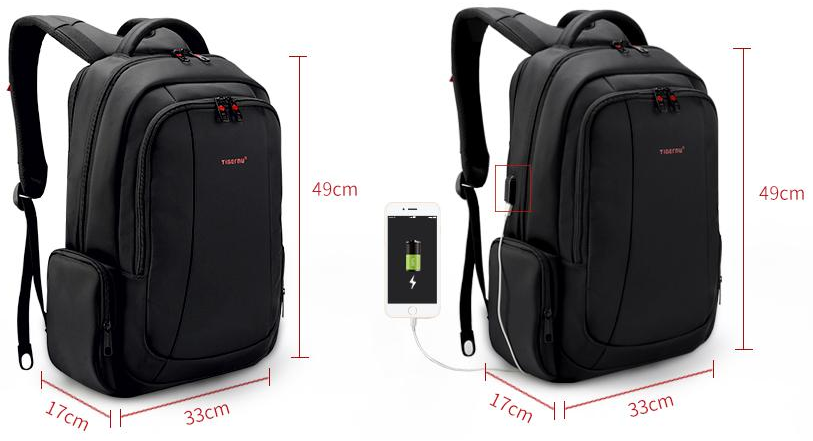
5. Keep your hands free with a backpack 
Rather than packing an overnight bag for carry-on, get a backpack instead. This way you can hold hands with little ones, buy food, hold onto passports, carry younger children, push trolleys and generally be less restricted.

Pinoy Cyber Sale

Black Friday is an informal name for the day following Thanksgiving Day in the United States, the fourth Thursday of November, which has been regarded as the beginning of the country’s Christmas Shopping season since 1952, although the term “Black Friday” did not become widely recognized or used until the 1980s or later in some regions. It was called Black Friday because so many people went out to shop that it caused traffic accidents and sometimes even violence.

Black Friday is a shopping day for a combination of reasons. As the first day after the last major holiday before Christmas, it marks the unofficial beginning of the Christmas shopping season. Additionally, many employers give their employees the day off as part of the Thanksgiving holiday weekend. In order to take advantage of this, virtually all retailers in the country, big and small, offer various sales.The early 2010s have seen retailers extend beyond normal hours in order to maintain an edge or to simply keep up with the competition. Such hours may include opening as early as 12:00 am or remaining open overnight on Thanksgiving Day and beginning sale prices at midnight.

Some online stores invest a lot of money in promotional campaigns to generate more sales and drive traffic to their stores. However, they often forget about the high loads their sites are going to experience. According to Retail Gazette, “A number of major retailers’ websites went down as they failed to cope with the surge in Black Friday traffic in 2017…This just highlights that some retailers have not taken the necessary steps to prepare for Black Friday. Failing to prepare for peak can cause poor performance, site downtime, and ultimately lost revenue for retailers”

Here in Philippines, Lazada one of the biggest online shop offering Cash On Delivery are having a Pinoy Cyber Sale from November 23-26 with a discount of up to 80% off to fashion, up to 50% off to electronics, and up to 74% off to home & living and sports & lifestyle. 

ASUS ZENFONE MAX PRO M1 Review and Specs

The ZenFone Max Pro M1 may look dull and subdued on first glance, but considering the size of the display and the package overall, it feels well built and snug in the hand. The buttons are well positioned and are slightly on the stiffer side but it feels fine given the price of the phone for as low as  ₱8,995  for the 3GB RAM and 32GB ROM model which can be purchase from Lazada via Cash on Delivery.

Asus even managed to put in a 5,000 mAh battery into this package which will leave you baffled considering the phone is just 8.5 mm thick. The phone is not all metal, with the frame of the phone being made of polycarbonate but it does feel sturdy enough to deal with a few knocks without a problem. The no-frills design outlook is also followed by a very curvy build overall which is a breakaway from Asus’ general design language. It helps with the grip in many ways. It is not the lightest phone at 180 grams but the larger battery does justify the weight a fair bit. The back of the phone comes with the Asus branding in the middle and the fingerprint scanner on top of it.

FEATURES
The Asus ZenFone Max Pro M1 has a 6-inch FHD+ (2160 by 1080) 18:9 Full View IPS display with an aspect ratio of 18:9. Under the hood, the phone is powered by the Snapdragon 636 SoC, which includes an Adreno 509 GPU. The phone has been launched in three variants which are 3 GB RAM + 32 GB storage, a 4 GB RAM + 64 GB storage and finally, a 6 GB RAM + 64 GB storage. In terms of software, the phone runs on Android Oreo 8.1.a. 

In the camera department, the phone has a dual-camera setup featuring a 13 MP sensor and a 5 MP one. The front camera is an 8 MP unit. There is also a rear placed fingerprint sensor just above the Asus logo. In terms of connectivity, the phone has dual-SIM slots, at least one of which supports 4G VoLTE.

Thankfully, you get three slots, so you can use two SIM cards as well as a microSD card. The entire setup is powered by a massive 5,000 mAh battery, which supports fast charging. Asus also throws in a software-enabled face-unlocking feature in addition to the fingerprint scanner.

The display is certainly one of the biggest plus points of the ZenFone Max Pro M1. It’s sharp, adequately bright even under direct sunlight and is just wonderful to watch videos on or play games. The 6-inch IPS LCD does not shift much colour when viewed at different angles and there are also no visible signs of backlight bleeding either. On paper, Asus says the display has a pixel density of 402 PPI but in my experience, it’s just as sharp as any other good LCD display that there is in the market. Reading long articles is not painful on the eyes either.

It is quite amazing that Asus managed to cram in a mammoth 5,000 mAh battery into the phone. With a 14nm chipset inside it, the ZenFone Max Pro lasted me two days with at least 35 percent juice left. This was with the brightness set to auto and performing daily tasks such as Facebook, Instagram, e-mail, and roughly two hours of gaming and video consumption. The battery also lasted us an impressive 11 hours and 13 minutes on our standard PC Mark Work 2.0 Battery Life test. With the supplied charger, it took me a little under 1 hour and 50 minutes hours to charge the phone up completely from 4 percent. That too is quite impressive considering you would typically need to charge the phone not more than thrice a week.

SPECIFICATIONS:
Android 8.1 Oreo
Dual SIM, Dual standby
6-inch FHD+ IPS Display, 2160 x 1080 resolution, ~402ppi
1.8GHz Qualcomm Snapdragon 636 octa-core processor
Adreno 509 GPU
3/4/6 GB RAM
32/64GB internal storage, expandable via microSD up to 400GB
5 or 8-megapixel front camera
13 or 16-megapixel + 5-megapixel dual rear cameras, PDAF, LED flash
Fingerprint scanner
WiFi 802.11 b/g/n, hotspot
Bluetooth 4.2
GPS, A-GPS, GLONASS, BDS
FM Radio
MicroUSB 2.0
Dimensions: 159 x 76 x 8.5mm
Weight: 180g
5,000mAh battery, 10W charger